

Short answer: not down to the wear indicators. Victoria's roadworthiness standard says brake lining must not be worn down to its wear indicators where it has them. Where it has none, the lining must be no thinner than the manufacturer's minimum, and where the manufacturer gives no figure, no less than 1.0mm.
That is the pass mark for a certificate. It is not advice on when to replace your pads, and the standard is clear about the difference.
What the standard says about pads
The standard is Vehicle Standards Information 26, published by the Victorian Department of Transport and Planning in March 2023. It is the set of written directions a licensed vehicle tester works to. Section C covers brakes.
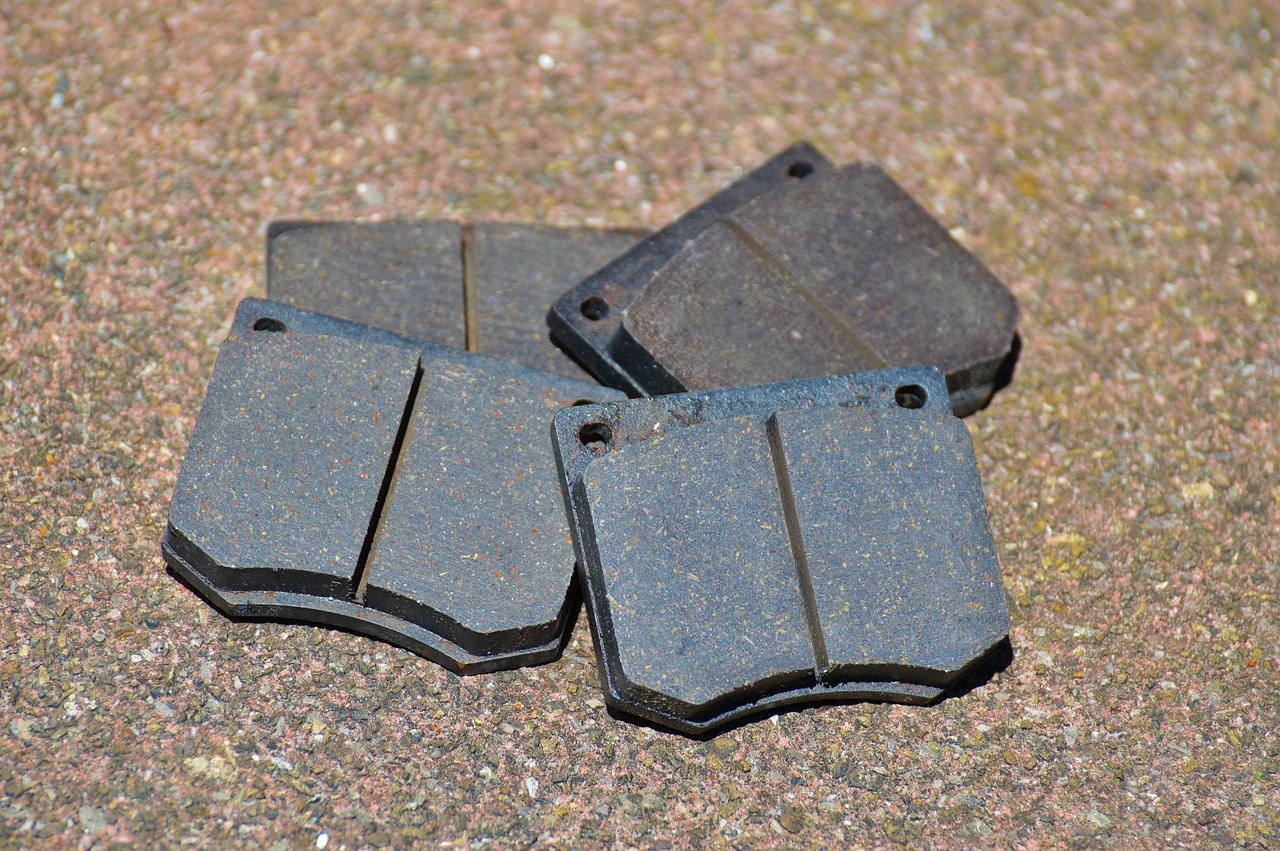
Lining material must not be worn down to the wear indicators where they are provided. Where no wear indicators are provided, the minimum remaining useable thickness of lining material measured at any point on the lining must be no less than the vehicle manufacturer's minimum recommended thickness and where no manufacturer's instructions are provided must be no less than 1.0mm. Brake lining materials must not be contaminated.
Two things in that paragraph are easy to miss. The thickness is measured at any point on the lining, so a pad that has worn unevenly is judged at its thinnest point. And contamination is a failure on its own, whatever the thickness.
Discs, fluid and hoses
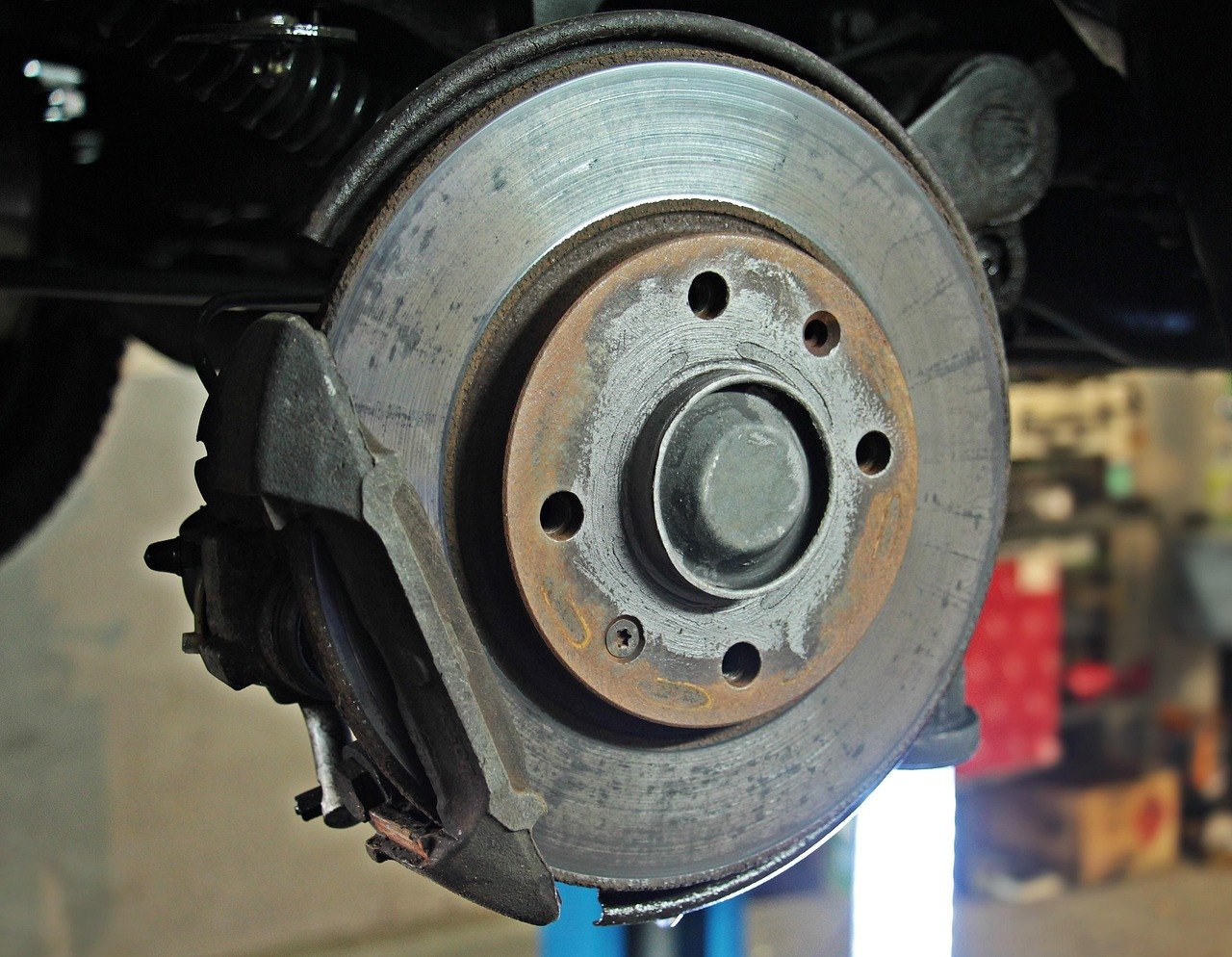
The thickness of the friction section of a brake disc or the internal diameter of a brake drum must be within the manufacturer's specifications. Light circumferential scoring is acceptable on friction surfaces providing it does not affect the operation or durability of the brake system.
So light scoring is not a failure by itself. A disc thinner than the manufacturer's specification is.
Hydraulic systems must be filled to the appropriate level and all pipes, hoses, cylinders and reservoirs must be free from leaks and apparent contamination.
The stopping test
The standard also sets a performance figure. Table 1 requires a vehicle under 2.5 tonnes gross vehicle mass to stop from 35km/h within 12.5 metres, with one sustained application of the brakes on a dry, smooth, level surface. It has to stay in its lane while doing it.
The application of the brakes must not cause the vehicle, when travelling in the centre of a 3.7m wide lane, to project outside that lane.
Warning lights count
Where ABS or ESC (or EBS for trailers) is fitted on a vehicle as standard, it must operate correctly. A fault with the operation of these systems is determined by the presence of a warning light.
For the purposes of the inspection, an ABS or stability control warning light on the dash is a fault.
What a pass does not tell you
A certificate of roadworthiness is not an inspection of the mechanical quality, reliability or cosmetic aspects of the vehicle.
The standard describes a certificate as certification that the vehicle met its requirements at the time of inspection. Pads that pass today can still be close to the end of their life. The same goes for suspension and steering.
What the owner's manual adds
Four points from a MINI owner's manual published by BMW Group are worth knowing. It is a US English edition, so check the manual that came with your own car.
New pads and discs need bedding in. This is on page 232.
Brake disks and brake pads only reach their full effectiveness after approx. 300 miles/500 km. Drive moderately during this break-in period.
The manual says the same break-in applies when those parts are renewed later in the car's life.
A car that is hardly driven can develop a pulsing brake pedal. On page 235 the manual lists low mileage, extended stationary periods and infrequent use of the brakes among the things that increase corrosion on the discs, and then says this.
Corrosion buildup on the brake disks will cause a pulsating effect on the brakes when braking slowly - generally this cannot be corrected.
A brake system warning is not one to sit on. This is the manual's entry for it, on page 128.
Brake system fault. Continue to drive moderately. Have the vehicle checked immediately by a dealer's service center or another qualified service center or repair shop.
And brake fluid is on a clock rather than an odometer. Page 280 of the same manual refers to the time-dependent maintenance procedures, such as checking brake fluid. Our brake repairs page explains why fluid ages, and we test it as part of a brake inspection.
How we handle it
We measure the pads and the discs against the manufacturer's minimum thickness rather than judging them by eye, check the hoses, seals and calipers, and test the condition of the fluid. You get the numbers, and a quote before any work starts.
BM Garage is a licensed vehicle tester. If a car fails its roadworthy on the brakes, the repair and the re-inspection happen here in the same visit.
Every car is different, so we quote on the car rather than from a list. Send us the year, model and rego along with what it needs, and we will put a tailored quote together.
Sources
- Vehicle Standards Information 26: Roadworthiness requirements, State of Victoria, Department of Transport and Planning, March 2023. Part 1, and Section C, Brakes, including Table 1.
- MINI Hardtop 2 Door / 4 Door Owner's Manual, BMW AG, US English edition, part no. 01405A541B0 - II/22. Pages 128, 232, 233, 235 and 280. Published on BMW Group's own server.
Every quotation above is taken word for word from those two documents. The standard applies to vehicles with a gross vehicle mass of 4.5 tonnes or less, and manuals differ by model and year, so check your own.
Perguntas frequentes
What is the minimum brake pad thickness for a roadworthy in Victoria?
Victoria's roadworthiness standard, VSI 26, says lining material must not be worn down to the wear indicators where they are provided. Where there are none, it must be no less than the vehicle manufacturer's minimum recommended thickness, and where no manufacturer's instructions are provided, no less than 1.0mm, measured at any point on the lining.
Does an ABS warning light fail a roadworthy in Victoria?
VSI 26 says that where ABS or ESC is fitted on a vehicle as standard it must operate correctly, and that a fault with the operation of these systems is determined by the presence of a warning light.
Do scored brake discs fail a roadworthy in Victoria?
Not automatically. VSI 26 accepts light circumferential scoring on friction surfaces provided it does not affect the operation or durability of the brake system. The thickness of the disc must be within the manufacturer's specifications.
Why do the brakes pulse on a car that is rarely driven?
A MINI owner's manual published by BMW Group lists low mileage, extended stationary periods and infrequent use of the brakes among the things that increase corrosion on the brake discs. It says corrosion buildup on the discs causes a pulsating effect when braking slowly, and that this generally cannot be corrected.