


Short answer: 1.5mm is the legal floor in Victoria, and it is a floor, not a target. The manufacturer's own advice is to stop well before it, and to replace tyres on age as well as wear.
The legal minimum
Victoria's roadworthiness standard is Vehicle Standards Information 26, published by the Department of Transport and Planning in March 2023. Section A covers wheels and tyres.
Except at the tread wear indicators, tyres must have a minimum tread depth of 1.5mm in all principal grooves.
The principal grooves are the wide ones, usually in the central zone of the tyre. The standard also deals with the wear indicators moulded into them.
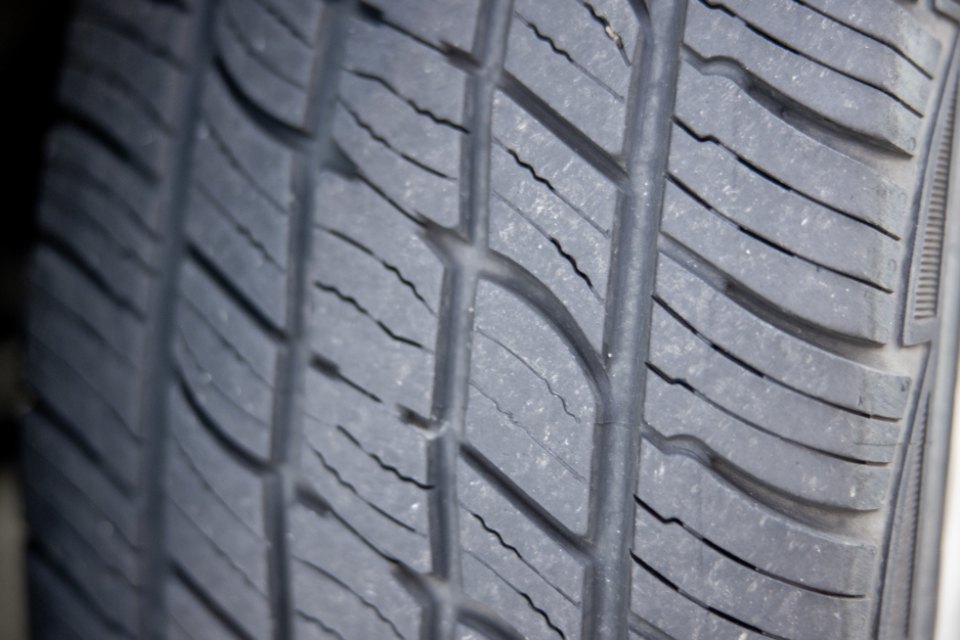
Where tread wear indicators are provided, the tread must not be worn to the extent that any tread wear indicator contacts the road surface.
What the manufacturer says
A MINI owner's manual published by BMW Group sets a different line on page 256. It is a US English edition, so check the manual that came with your own car. This is its advice for summer tyres.
Do not drive with a tire tread depth of less than 0.12 in/3 mm, otherwise there is an increased risk of aquaplaning.
That is twice the legal minimum. The manual then points back to the law.
Irrespective of the wear indicators, observe the statutory regulations on the minimum tread depth.
So the two documents fit together. The law says where a tyre becomes unroadworthy. The manufacturer says where it stops gripping a wet road the way it should.
Age counts as well as wear
Tread is not the only clock. Page 254 of the same manual carries a recommendation that surprises people who do few kilometres.
Regardless of the tire tread depth, replace tires at least every 6 years.
The manual says you can find the manufacture date on the tyre sidewall, and gives the example of a DOT code ending in 0122, which it reads as the 1st week of 2022.
Wear that is uneven
A tyre can have plenty of tread in the middle and still fail.
A tyre must not have uneven wear across its width such that an edge of the tyre is significantly more worn than the remainder of the tyre surface.
The owner's manual lists an uneven wear pattern among its indications of tire damage or other vehicle malfunctions, alongside unusual vibrations and a strong tendency to pull to the left or right. On a pre-purchase inspection we treat uneven wear as a pointer to alignment or a suspension fault, which is the subject of our post on suspension and steering wear.
Damage, repairs and mixed tyres
The standard also requires a check for damage.
The tyres should also be checked to ensure they are free from any deep cuts, cracks, bulges or any other damage or defects likely to cause failure of the tyre.
Some repairs are ruled out.
Repairs to the sidewall or shoulder areas on radial ply passenger car tyres are not acceptable.
And tyres have to match in construction, which matters on cars that left the factory on run-flats.
For vehicles fitted with passenger car tyres and manufactured after 1 January 1973, all tyres fitted to the road wheels must be of the same carcass construction (i.e. radial ply, cross ply, bias belted, run-flats etc.), but may have a different tread pattern.
One more that catches people out on the day of the test.
A Certificate of Roadworthiness must not be issued for a vehicle which has a temporary use spare tyre fitted to one or more road wheels.
How we handle it
We look at tread, age and the wear pattern together, because the pattern often says more than the depth. We fit tyres, balance wheels and do wheel alignments.
BM Garage is a licensed vehicle tester. If a car fails its roadworthy on tyres, the replacement and the re-inspection happen here in the same visit.
Every car is different, so we quote on the car rather than from a list. Send us the year, model and rego along with what it needs, and we will put a tailored quote together.
Sources
- Vehicle Standards Information 26: Roadworthiness requirements, State of Victoria, Department of Transport and Planning, March 2023. Section A, Wheels and tyres.
- MINI Hardtop 2 Door / 4 Door Owner's Manual, BMW AG, US English edition, part no. 01405A541B0 - II/22. Pages 254, 255 and 256. Published on BMW Group's own server.
Every quotation above is taken word for word from those two documents. The standard applies to vehicles with a gross vehicle mass of 4.5 tonnes or less, and manuals differ by model and year, so check your own.
Common questions
What is the minimum legal tyre tread depth for a roadworthy in Victoria?
Victoria's roadworthiness standard, VSI 26, says that except at the tread wear indicators, tyres must have a minimum tread depth of 1.5mm in all principal grooves. Where tread wear indicators are provided, the tread must not be worn to the extent that any indicator contacts the road surface.
Should I wait until my tyres reach the legal minimum?
A MINI owner's manual published by BMW Group advises against it. For summer tyres it says not to drive with a tread depth of less than 3 mm, because there is otherwise an increased risk of aquaplaning.
Do tyres need replacing if they still have tread?
The same manual recommends replacing tyres at least every 6 years, regardless of the tread depth. The manufacture date is on the tyre sidewall.
Can I mix run-flat and ordinary tyres on the same car?
Not for a roadworthy in Victoria. VSI 26 says that for vehicles fitted with passenger car tyres and manufactured after 1 January 1973, all tyres fitted to the road wheels must be of the same carcass construction, and it lists run-flats as a construction type.
Does uneven tyre wear fail a roadworthy in Victoria?
VSI 26 says a tyre must not have uneven wear across its width such that an edge of the tyre is significantly more worn than the remainder of the tyre surface.